Climate change is caused by increasing concentrations of carbon dioxide (CO2) and other greenhouse gases in the atmosphere. Due to climate change, the climate is warming, sea levels are rising, and glaciers are melting ever faster.
Although we cannot stop climate change completely, our choices can help slow the damage it causes. However, the change must be made quickly.
Carbon dioxide emissions account for the largest share of all gases causing global warming: 80%. About 75% of carbon dioxide emissions, in turn, come from the use of fossil fuels. In Finland, energy production and transportation generate the most emissions. In a cold country, heating requires a great deal of energy.
Fortunately, carbon dioxide is also absorbed by the oceans, soil, and vegetation. According to researchers, forests in northern and temperate zones are significant absorbers of carbon dioxide.
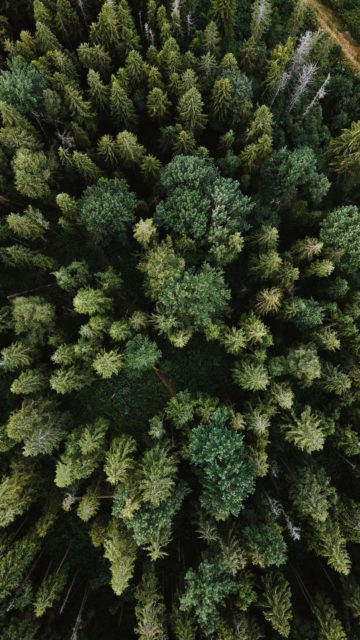
Fortunately, there is plenty of forest
Forests cover more than 70% of our land area. Finland has the highest proportion of forest cover in Europe. According to the Ministry of Agriculture and Forestry, we have approximately 20.3 million hectares of forest land suitable for timber production.
Finland has long been known as a producer of pulp and paper, but new uses have since been developed for wood harvested from our commercial forests, including as a replacement for single-use plastic, in composite materials, and in textiles. Wood construction is also growing strongly. Small-home construction naturally has a long tradition in Finland, but today we also build public buildings from wood, such as libraries, schools, day care centers, and offices. Environmentally friendly wooden apartment buildings are rising in the green areas of cities. For example, a 14-story wooden apartment building, the tallest in Finland and the Nordic countries, will be completed in Joensuu in August. In a heavily forested country, increasing the use of wood in construction makes sense, especially for environmental reasons. A wooden building continues to function as a carbon sink even though the wood used to construct it has already been harvested.
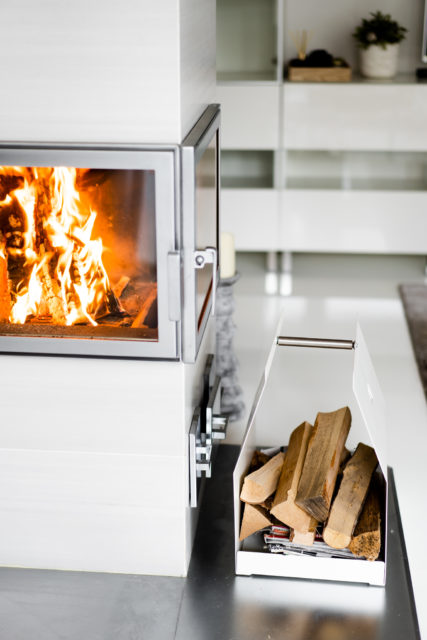
Energy from wood
Wood is an important source of energy for Finns. Between 8.2 and 9.2 million cubic meters of energy wood were harvested annually in the 2010s. In 2018, bioenergy was Finland’s largest energy source, at 115 TWh (30% of total energy consumption). Of this, wood fuels accounted for by far the largest share, 91% or 104.5 TWh. Bioenergy accounted for more than 80% of all renewable energy. Its production grew by 43% between 2009 and 2018.
In Finland, wood energy is produced primarily from by-products of the forest industry and forestry. Firewood is also recovered when thinning is used to promote the growth of trees left in the forest.
Forests are an irreplaceable carbon sink
As a carbon sink, our country’s forests are important not only to us Finns, but to the entire world’s population. The sustainable use of our forest resources is therefore vital to slowing climate change.
Each year, Finland’s forest carbon sinks absorb an amount of carbon dioxide equivalent to approximately half of Finland’s greenhouse gas emissions. The growth of Finland’s forests sequesters more carbon than is released through forest use and natural losses.
Trees are a carbon sink during the growing season. During periods of vigorous growth, trees sequester more carbon than older forests, where growth slows down. Old forests are above all a carbon store.
In 2017, Finland’s carbon sink was 27 million t CO2 eq, corresponding to 48% of Finland’s greenhouse gas emissions. Under the second commitment period of the Kyoto Protocol, Finland has committed internationally to maintaining a carbon sink of 19 million t CO2 eq per year through 2020.
According to the new government’s program, Finland aims to become carbon neutral by 2035.
Due to EU legislation, emissions must be reduced to approximately 40–42 Mt by 2030, and even more rapidly thereafter. Carbon sinks will play an even greater role.
READ THESE TOO


