Heating with a fireplace is always a smart choice
Finns heat their homes with 2.2 million fireplaces. They produce 15 TWh of heating energy annually. This is equivalent to the annual output of two Olkiluoto reactors. Considering all Finnish single-family homes, fireplaces produce 40% of their annual heating needs.
According to experts, every Finnish single-family home and townhouse should have a slow-heating fireplace. Households can save on electricity bills and reduce carbon dioxide emissions by heating with a heat-retaining fireplace. At the same time, a heat source independent of electricity improves a home’s resilience during power outages.
Significant savings ahead
According to studies, a slow-heating, heat-retaining fireplace can meet up to half of a home’s heating needs. This naturally depends on many factors: the features of the fireplace, the size and energy efficiency of the building, and living habits.
In Finland, a vast number of households faithfully heat an old heat-retaining fireplace every other day during the heating season. This saves the electricity or oil required by the primary heating system, which in turn affects housing costs. In practice, the other form of heating is often needed mainly for heating domestic hot water. By heating with a new, efficient heat-retaining fireplace and properly burning high-quality mixed firewood, you can reduce heating energy consumption by approximately 1,000 kWh per stacked cubic meter.
This means that during a winter month, burning a basketful of firewood per day in a heat-retaining fireplace can easily save you €130 in heating costs.
A fireplace in every single-family home
So, if your home has a fireplace, it is worth heating it, and if it does not, you should definitely get one. A fireplace is an excellent heat source even in highly energy-efficient and near-zero-energy homes built in accordance with the new building regulations.
The matter was examined in the 2014 “Fireplace & Heat” research project funded by Tekes, the Fireplace and Chimney Association TSY, and fireplace manufacturers. According to the research findings, fireplaces with slow and very slow heat release, i.e. heat-retaining fireplaces, can produce approximately half of the heat needed by a building without overheating the living space – regardless of the building’s energy efficiency. To achieve the same result in homes that consume a great deal of energy, considerably more wood simply needs to be burned than in a new energy-efficient home.
The amount of wood burned in slow and very slow fireplaces ranged from 14.1 stacked m3/year in the building with the highest energy consumption to 2.3 stacked m3/year in a passive house. For a fireplace with fast heat release, wood consumption was 4.3 stacked m3/year in the building with the highest energy consumption and 0.6 stacked m3/year in a passive house. Research report “Heat release and efficiencies of fireplaces in different use cases”.
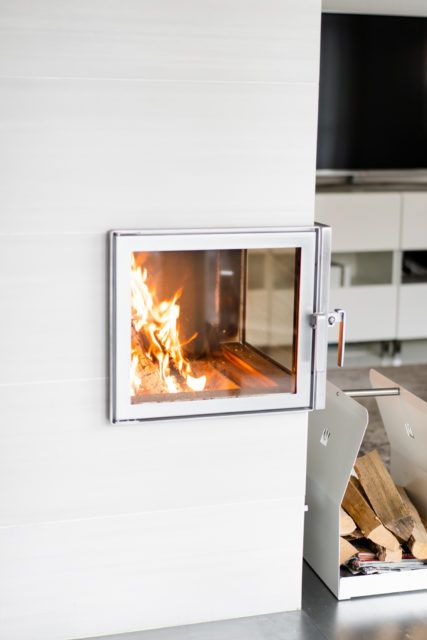
Energy savings
There are half a million homes with direct electric heating in Finland. Some also have a fireplace, while others have been fitted with an air-source heat pump as an additional heat source. According to the Finnish Heat Pump Association SULPU, there are already approximately 700,000 of these in Finland. The total price of electricity consists of the cost of the energy used, electricity transmission, and taxes. Household electricity bills have increased more than 2.5-fold from the early 1990s to the present day. It is said that electricity is still affordable in Finland compared with other European countries, but its total cost has risen faster than overall prices. Our housing costs are already high compared with the general European level. The price of electricity is determined daily in the spot auction conducted on the electricity exchange Nord Pool.
Naturally, rising electricity prices make heating with a fireplace an even more sensible option.
Oil heating is on its way out in Finnish homes
Finland still has approximately 150,000 homes heated with oil. The price of oil varies according to demand and the competitive situation, and approximately one-third of consumer prices consists of taxes. For example, in August 2017, heating oil cost less than €0.85/liter, compared with an average of €1.02/liter last year. A family of four living in a new 150–200 m² single-family home uses an average of 2,000 liters of oil per year for heating and producing domestic hot water. You can follow price fluctuations in Statistics Finland’s Energy Prices statistics, published four times a year.
But there’s always electricity, right?
Direct electric heating is a carefree and reliable form of heating, as long as the electricity supply works without interruption. However, the Tapani and Hannu storms of December 2011 reminded us how dependent we are on electricity, especially during the winter. Tens of thousands of households suffered from power outages throughout Finland. At their worst, the power outages lasted several days.
The situation was considerably better in homes with a fireplace or even a wood cookstove. They were able to provide heat and cook food at home. Many people do not realize that without electricity, oil and pellet boilers, heat pumps, and district heating systems also do not work.
Since then, heavy snow loads on trees have also caused power outages lasting several days in sparsely populated areas of parts of Finland. However, residents have not had to leave their homes everywhere, because they have been able to heat them with a fireplace or wood cookstove.
Especially during freezing weather, the temperature in a home without electricity drops quickly. With a heat-retaining fireplace or convection fireplace that operates independently of electricity, at least part of the home can be kept habitable until power is restored. A fireplace can also be used to cook and heat food when necessary.
A fireplace in the home is therefore an important factor in maintaining heating self-sufficiency and security of supply.
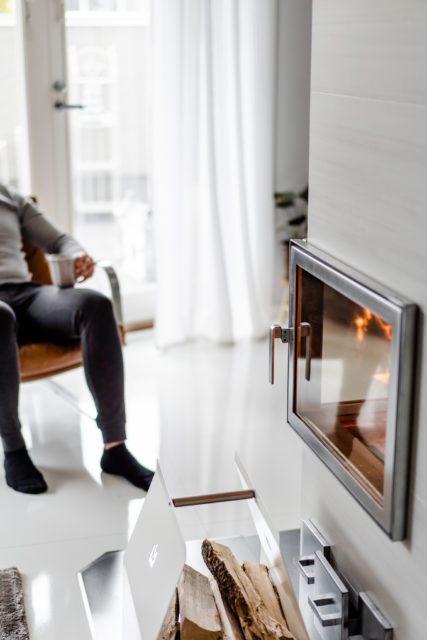
Security of supply is not just a private matter
The heating self-sufficiency of Finnish homes is also important to society. Despite climate change, Finland can still experience periods of severe freezing weather in some winters. During freezing weather, fireplaces level out peaks in electricity consumption, thereby preventing grid overload and reducing the use of expensive market-priced electricity.
Heat pump solutions are good ways to produce environmentally friendly energy and save on energy costs, but in the most severe freezing weather, they no longer operate at their best efficiency. Naturally, heat pumps also require electricity to operate.
During peak consumption, the entire electricity generation reserve must be brought online – including, potentially, the most polluting coal-fired power plants if imported electricity is not available. Energy self-sufficiency is important for a small country. Because of periods of peak consumption, it is also not sensible to build new power plants if peak consumption can be reduced by other means.
Imported electricity: expensive and bad for the environment
During severe freezing weather, more electricity than usual is needed because heating buildings increases consumption – the colder it gets, the more consumption rises. High consumption is naturally reflected in the price of electricity.
The exceptionally severe freezing weather of the winter of 2018–2019 once again pushed electricity consumption to record levels, exceeding 14,000 megawatts. Finland cannot produce this amount of electricity itself, so imported electricity already accounted for nearly one-third of total consumption. According to Fingrid, electricity was imported from Sweden, as well as from Russia, Estonia, and Norway.
The price of electricity rose to more than 80 euros per megawatt-hour. The normal price on the Nordic power exchange is around 50 euros per megawatt-hour. Similar peak figures were also reached during the cold spell in February 2018. The price of electricity during the peak hour was 249.97 euros per megawatt-hour, compared with 74.96 euros per megawatt-hour the previous week.
Although the winter of 2017 was fairly mild, electricity was imported at an average power of 4,755 megawatts during the brief cold spell in January. At that time, the full transmission capacity of the power line running from Russia to Finland via Lappeenranta was in use.
The peak consumption in the winter of 2016 was 15,105 MWh/h, which also remains Finland’s all-time record for electricity consumption.
Although there has been enough electricity for everyone even during severe cold spells, at least so far, this is unfortunately reflected in prices. When demand for electricity is high, producing it in an environmentally friendly way is unfortunately not a given. The alternative is to bring reserve power plants fueled by polluting fossil fuels online or, conversely, to heat with wood as much as possible and reduce the need to use electricity for heating.
In a study commissioned by the Finnish Fireplace and Chimney Association TSY during the 2018–2019 heating season, it was estimated that if all Finnish households with electric heating stopped using their fireplaces for supplemental heating as they currently do, demand for domestically produced electricity would increase by 9% during the winter months and imported electricity by 41%. In practice, we would need one more Olkiluoto power plant.
The status of Finland’s electricity system can be monitored almost in real time on Fingrid’s website.
READ THESE TOO


